About Cashmere&Pashmina
WHAT IS CASHMERE?
Cashmere is shed down annually from goats living in the high, dry plateaus that stretch from northern China into Mongolia, surrounding the Gobi Desert. In order to survive, these goats have coarse hair that repels the bad weather. Beneath that external coat lies a much finer fiber, cashmere, which insulates these animals from the bitter cold.
Cashmere is the most sleek, soft and luxurious natural fiber in the world. And we need highest standards to process it. As spring comes, and before the goat begins to moult, the shepherds and their families, begin the laborious work of combing the precious under fleece from their goats. The combing season lasts three to four weeks and the amounts produced are small - around 200-250 grams per goat. The next task is to collect the raw cashmere. Cashmere is collected in its three base colors - brown, grey and white and is sorted by hand to remove impurities. First the fiber is treated to remove dust, and then gently washed. Cashmere consists of a coarse guard hair and down which has to be separated. Only after washing and the hair has been removed, by which time it may be reduced in weight by as much as 50%, is the cashmere deemed top quality.
Cashmere like all the best things in life has a eternal quality.
Why is cashmere so expensive?
Cashmere comes from goats living in the high and dry plateaus surrounding the Gobi Desert of Mongolia and China. Because of the harsh environment there are not so many cashmere goats. The annual amount of cashmere produced is between 10,000 to 12,000 tons all over the world. Cashmere produced in China accounts for about 70% of the world. A goat only produces about 50 - 80 grams washed cashmere annually. It means that a piece of common cashmere sweater consumes the cashmere from 5goats in one year.
In every spring before goats moult nomadic farmers begin the painstaking task of combing out the precious hair. It's called raw cashmere. Before weaving these cashmeres, we must sort, scour, dye and spin them, etc. Handwork is indispensable in making of an excellent finished product.
Cashmere product is so expensive because of exiguity of raw material, complicated processing course and hand work.
How do I judge a good cashmere sweater?
Your fingers are very good judges. If a cashmere sweater doesn't feel smooth, soft and luxurious, don't buy it. The other critical factor is density/weight. Pull the sides of the sweater apart and then let them go. The sweater should snap back to its original shape. Loosely knit, limp fabric is the hallmark of a cheaply made sweater. A good sweater should feel hefty and substantial even if it is lightweight.
What causes pilling?
Pilling is caused by the abrasion of short fibers into small balls on the surface of the fabric. Some pilling will occur in most new sweaters, especially those worn under other garments. But the problem will not persist in a good garment after the first cleaning. Persistent pilling is the result of a high percentage of short fibers combined with a loosely knit fabric. Lower quality manufacturers use shorter fiber because it is cheaper. Pilling is a natural occurrence on cashmere and wool. However, a quality sweater should not pill excessively. The pilling is usually caused by a friction of some sort; such as a seat belt, purse strap, or even synthetic linings of jackets. When pilling occurs, pull or carefully cut the pills off, breaking the connection. Then wash the garment according to the above instructions.
What is Pashmina?
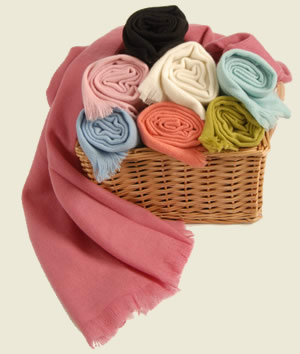
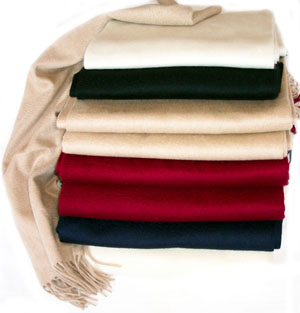
Pashmina is a textile, which became popular in the West in the late 1990s. It is very soft and warm, and used primarily in scarves and shawls. The word is derived from the Persian word pashm, which refers to the undercoat of fur on many animals - in this case, the goat.
Most commercially available Pashmina is actually a blend of pure Pashmina wool and silk. Pashmina made from cashmere is becoming very trendy in late 90s. With special treatment, Pashmina has a silky handle with lightweight, Pashmina use cashmere blends with wool and silk spanned in high yarn counts. As a general rule, the higher the content of cashmere, the higher the yarn count, the more expensive the textile.
About Care Guildeline
Cashmere Knitwear Care Guidelines
Our cashmere care guidelines offer advice on the following aspects of cashmere care:
- cashmere cleaning, including handwashing & dry cleaning
- cashmere storage and moth prevention
- cashmere fuzz & bobble removal
Cashmere Care - Washing
Cashmere knitwear can be hand washed or dry-cleaned. Some cashmere can also be washed using the handwash, delicates or woollens cycle on your washing machine. When washing your cashmere in a washing machine ensure you use a specialist cashmere or delicates washing liquid.
If you would like to wash your cashmere knitwear, follow the CashmereShopping care guidelines below (having first turned your cashmere knitwear inside out):
Machine Washing Cashmere:
An increasing number of cashmere knitwear manufacturers are producing cashmere that can be machine washed in a machine at up to 40 degrees. We do not recommend using a biological detergent and you should always check the garment's care label first to ensure that it is suitable for machine washing.
We have used Persil Silk & Wool (in the UK) with cashmere successfully on a wool wash in a machine at 30 degrees. There are now, however, many specialist cashmere care and wool washing products available.
Hand Washing Cashmere:
Wash your cashmere garment in lukewarm water using a specialist mild detergent.
When you are washing by hand, squeeze the suds gently through the fabric and do not rub, wring or stretch the fabric in any way. Then rinse carefully in clean lukewarm water (more than once) until all the detergent has been removed and the water runs clear.
Soaking wet cashmere knitwear should only be lifted after the excess water has been squeezed out (or has been on a slow spin cycle in the machine) as it may stretch if you are not careful.
Once your cashmere has been washed, smooth it back into its original shape and place it flat on a towel and dry naturally away from direct heat (ie radiators or sunlight). Do not hang your cashmere knitwear on a washing line to dry - it will stretch out of shape. You should not tumble dry cashmere unless this is specified as an option on the care label. You should not leave your cashmere wet; you should dry it as soon as soon as you have washed it to avoid the 'wet dog' smell!
When your cashmere garment is dry you may press it lightly with a cool iron to remove any slight creases. But always read the cashmere care label before washing your cashmere knitwear. Cashmere clothing which can't be washed, either by hand or in a machine, can usually be dry cleaned.
Cashmere Care - Storage
The following are some guidelines on cashmere care which may be useful when you are deciding how best to store your cashmere clothing.
We suggest storing cashmere knitwear in sealed boxes or bags when it is not in use to reduce the risk of insect attack. You should always wash and thoroughly dry your cashmere sweaters before you store them, as soiled knitwear is more attractive to insects and moths. The use of some kind of moth repellents is advisable as moths are big fans of cashmere wool. Cedar wood moth repellents are a much nicer smelling alternative to old fashioned moth balls and are recommended for cashmere care.
Freezing your cashmere:
If you have an item of cashmere clothing that for some reason can't be washed, fold it up and put it a plastic bag, then put it in the freezer overnight. This will kill anything, including moth larvae, which may be lurking somewhere deep within the cashmere. Freezing your cashmere sweaters is also a good way of fluffing up the fabric.
You shouldn't store cashmere sweaters by hanging them on coat hangers as this will cause sagging and distort the shape of the shoulders of cashmere jumpers and cardigans. It is worth folding them carefully and storing them in a drawer or on a shelf when in use and in a sealed box or bag when not in use.
Ideally, to offer the best care for your cashmere, we recommend you store your washed out-of-season cashmere clothing in cotton breathable washable garment bags. Do not store your cashmere in plastic as cashmere needs to be able to breathe. If you have several folded cashmere items you can use a storage box lined with acid free tissue. Remember you shouldn't store your clothes in a hot or damp loft or cellar. The best store option for cashmere care is to put your storage box or bag in a spare room on top of a cupboard, not jammed underneath a bed.
Cashmere Care - Pilling Problems
Cashmere is a very fine natural fibre. Knitwear made from cashmere requires care and attention but will reward you by lasting a long time and continuing to feel soft wash after wash if it is well cared for.
After the first few 'wears' you may find small balls, or bobbles, of fibre forming on the surface of your cashmere knitwear. These small balls are caused by some of the loose fibres rubbing together during wear, for example under the arms or on the elbows and sleeves of cashmere jumpers and sweaters.
This 'pilling' does not indicate inferior quality cashmere knitwear; it is the result of wearing such a fine fibre. The bobbles can be easily removed, either by carefully picking the balls off by hand or by using a cashmere comb, fabric shaver, de-fuzzing or fuzz away device, available from department stores or supermarkets.
Once you have removed the pilling, the cashmere garment will increase in softness and become even lovelier to handle. The bobbles will decrease over time if you care for your cashmere knitwear carefully. Please find more information on our favourite knitwear comb below.
Fact: Cashmere derives its name from the Kashmir goats of Tibetan origin which are found in the mountainous regions around central Asia and the Himalayas.
|